


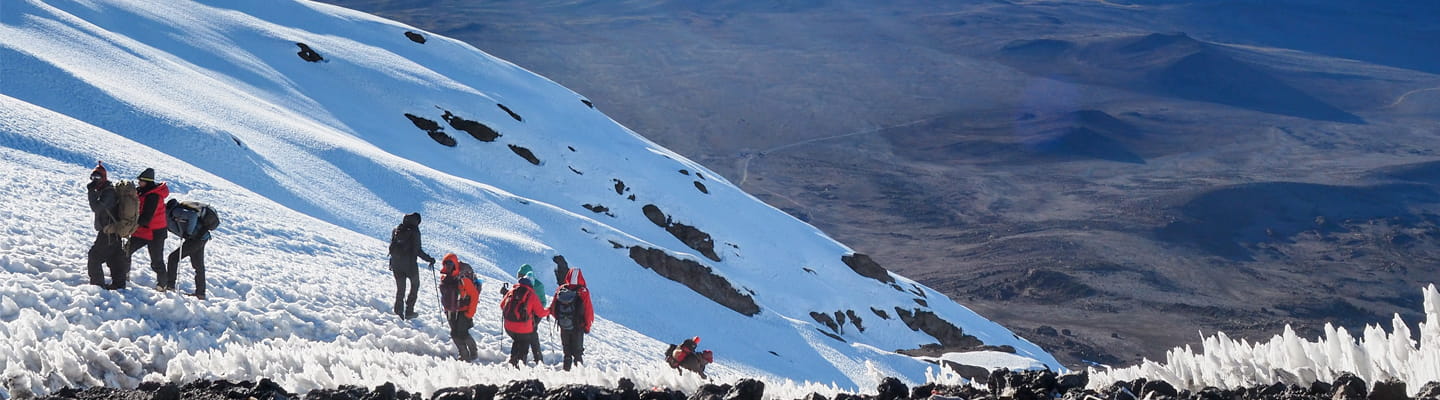
Reaching Uhuru Peak at 19,341 feet is the goal, but standard travel insurance often won’t cover you there. Climbing Kilimanjaro is a high-risk activity, so you’ll need adventure travel insurance built for it.
Here’s what to look for so you’re covered from the trailhead to the summit and back.
Key takeaways
- Look for a plan that explicitly covers mountain climbing or high-altitude trekking to your altitude goal.
- Prioritize travel medical, search and rescue, and emergency medical evacuation coverage. Make sure the evacuation benefit covers high-altitude helicopter extraction.
- Read the full policy document before you buy, and contact SOVENTURE’s team of licensed agents if you have questions about whether a plan meets your needs.
Why you need a policy built for this climb
Many tour operators require proof of travel insurance for climbing Kilimanjaro, and for good reason. It’s remote, the altitude is serious, and weather near the summit can turn fast.
But not all travel insurance is equal. A standard policy may exclude coverage for high-risk activities like hiking and mountain climbing, and it might not cover the high-altitude helicopter extraction you’d need if injured near the summit.
You’ll want to look for a comprehensive adventure travel insurance plan that covers the essential benefits you need before and during the climb.
What to look for in a Kilimanjaro travel insurance policy
Here are a few key things to look for when comparing travel insurance for climbing Kilimanjaro.
Coverage for the altitude you’re climbing to
Kilimanjaro’s summit sits at 19,341 feet. Look for a policy that explicitly covers trekking up to 6,000 meters (19,685 feet).
If you can’t find language in the policy documents confirming that it covers mountain climbing or high-altitude trekking to this altitude, give our team of fully licensed agents a call for help.
Emergency medical expense coverage
Altitude sickness is common on Kilimanjaro, and you’ll be glad to have solid medical coverage if it hits you. Travel medical insurance reimburses for treatment, including doctor visits, hospital stays, and medication.
Limits on travel medical coverage commonly range from $50,000 to $500,000. For a climb like this, skip any plans that offer less than $100,000.
Emergency medical evacuation and helicopter extraction
Emergency medical evacuation is the benefit most likely to matter on Kilimanjaro. If you can’t descend safely on your own, evacuation coverage pays to transport you to the nearest hospital equipped to treat you.
Make sure the policy you choose specifically covers high-altitude helicopter extraction. Helicopters can’t land at Kilimanjaro’s summit, so rescues typically combine a guided or stretcher-assisted descent to a lower landing site with an airlift from there.
Evacuation and repatriation limits can reach $1 million on comprehensive plans. We recommend you get a plan with at least $500,000 in coverage.
Search and rescue
Search and rescue is a separate benefit from medical evacuation. It pays for an organized search if you become lost, disoriented, or stranded during a recreational activity within your skill level.
Not every plan includes search and rescue coverage, and some only offer it as an optional add-on. You might find limits from $10,000 to $100,000, depending on the policy.
Trip cancellation and interruption
A Kilimanjaro trip isn’t cheap, so you’ll want a comprehensive travel insurance plan that protects your prepaid, nonrefundable expenses.
Trip cancellation coverage protects that investment if you have to cancel before departure due to illness, injury, or another covered reason. It typically reimburses up to 100% of your insured nonrefundable expenses.
Trip interruption does the same if you have to cut the trip short after it starts, often up to 150% of your trip cost to help cover the added expense of an early return.
Baggage and gear coverage
If an airline loses or delays your bag, you may need to rent boots, cold-weather layers, or other essentials in Moshi before your trek starts, and baggage insurance might help reimburse that expense.
Look at both per-item and maximum limits when comparing plans. Also check whether there’s a separate equipment-rental reimbursement benefit specifically for delayed gear.
How to choose the right plan
Here’s how to start shopping for the best travel insurance for climbing Kilimanjaro:
- Use our quote tool and filter results by “mountain climbing” under covered activities.
- Check if high-altitude trekking is covered up to the altitude you need.
- Look for a plan with at least $100,000 in emergency medical coverage, and see if that coverage is primary or secondary (primary pays first, so you wouldn’t have to file a claim with your health insurance before filing a travel insurance claim).
- Pick a plan with $500,000 or more in emergency evacuation coverage. Make sure the evacuation insurance covers high-altitude helicopter extraction.
- See if the plan you’re interested in includes coverage for search and rescue.
- Compare baggage and per-item limits against what your gear actually costs to replace or rent locally.
- Consider optional upgrades, like higher baggage or medical evacuation limits.
- Think about adding cancel for any reason (CFAR) coverage, if you want more flexibility to be able to cancel your trip for reasons not listed in the policy.
- Read the certificate of coverage itself, not just the plan highlights, so you know exactly what’s covered and excluded. Contact our support team if you have any questions.
When to buy your policy
It’s best to buy travel insurance as soon as you make your first nonrefundable trip payment. Doing so gives you trip cancellation coverage leading up to your departure, and it can potentially qualify you for time-sensitive benefits, like pre-existing condition waivers.
Frequently asked questions
Do tour operators require travel insurance to climb Kilimanjaro?
Yes. Most tour operators require that you buy travel insurance, separate from any waiver or liability form they may have you sign.
How much medical evacuation coverage do I need for Kilimanjaro?
Aim for at least $500,000. Evacuation from a remote, high-altitude location can be very expensive.
What happens if my gear doesn’t arrive before my climb?
A travel insurance policy with solid baggage coverage may reimburse the cost of renting essential gear locally, boots, a sleeping bag, or cold-weather layers, if your bag is lost or delayed. Check the per-item limit for baggage insurance if you’ll be traveling with expensive gear.

