


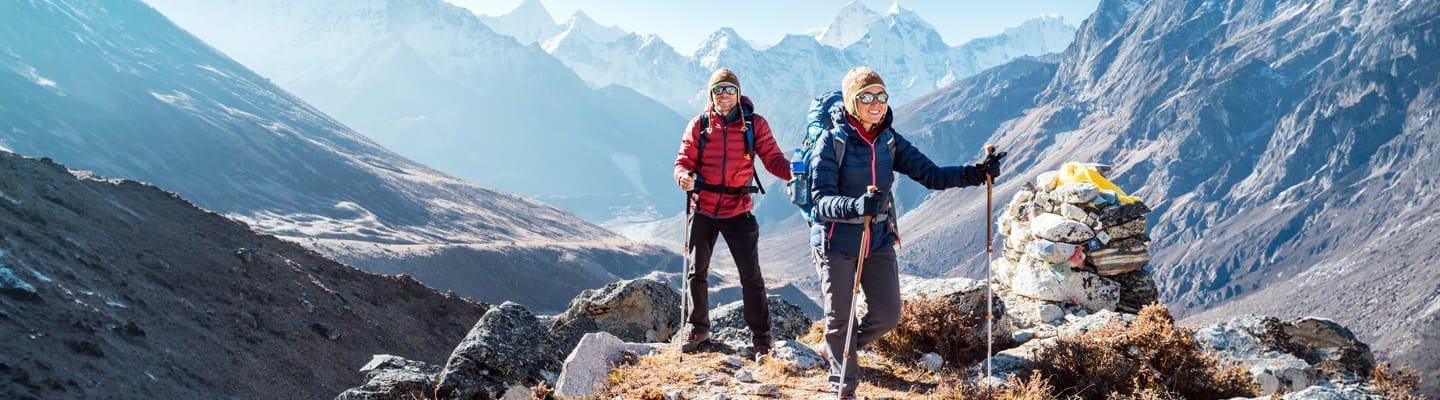
Everest South Base Camp is at 5,364 meters, and the Annapurna Circuit climbs even higher to 5,416 meters. Standard travel insurance might not cover mountaineering at these altitudes.
Here’s how to find the best travel insurance for Nepal trekking.
Key takeaways
- Look for an adventure travel insurance policy that covers mountain climbing or mountaineering.
- Make sure the policy covers your altitude goal and the way you’re trekking (guided, independent, or with technical gear).
- Prioritize emergency medical evacuation and search and rescue coverage.
Why Nepal trekking needs specialized coverage
Nepal attracts more than 200,000 trekkers a year, most heading for the Himalayas to navigate routes that climb well above 4,500 meters. The altitude is the draw, but standard travel insurance may not cover you there.
Basic travel insurance policies often exclude coverage for extreme sports like mountaineering. If you get hurt or sick while pursuing an adventure activity your policy lists as an exclusion, you can’t expect to file a successful claim.
You’ll need a high-altitude trekking travel insurance policy for Nepal, designed to cover the exact activities and altitudes you’re planning.
Tip: On SOVENTURE, you can search for adventure travel insurance by covered activity. Use our quote tool and filter your results by “mountain climbing” or “mountaineering.” This is the best place to start, but you’ll still need to dig into the policies you’re comparing to find the best one for your planned itinerary.
What to look for in a Nepal trekking travel insurance policy
Here’s what to look for when comparing plans for travel insurance trekking up to 4500 meters, or beyond.
Coverage for the altitude you’re climbing to
Start with a list of policies that cover mountain climbing, then dig into policy certificates for details. If you can’t find language that confirms trekking coverage up to the altitude you need, call our team of fully licensed agents for help.
Emergency medical expense coverage
Altitude sickness, gastrointestinal illness, and falls are common perils for trekkers in Nepal. Travel medical coverage reimburses you for treatment, including clinic visits, hospital stays, and prescription medication. For a high-altitude trek, look for a plan with at least $100,000 in emergency medical coverage.
Medical evacuation and helicopter rescue
Once you’re a few days into the Khumbu or Annapurna region of Nepal, a helicopter may be your only way to reach adequate medical care. Look for a policy that has at least $500,000 in emergency evacuation coverage, and make sure it specifically covers high-altitude helicopter evacuation.
Search and rescue
Search and rescue coverage is offered with some travel insurance plans, but not all. It pays for an organized search if you get lost, disoriented, or stranded while engaging in a recreational activity within your skill level. Compare the coverage limits between plans, because they can range from $10,000 to $100,000.
Trip cancellation and interruption
A Nepal trek can involve expensive nonrefundable flights and tours. Trip cancellation reimburses up to 100% of those costs if you have to cancel for a covered reason, such as getting injured before your departure date.
Trip interruption reimburses unused, nonrefundable expenses, and the added cost of getting you home early, if you have to cut your trip short for a covered reason. Look for a plan that offers 150% of your insured trip cost for this benefit.
Gear and baggage coverage
If you arrive in Kathmandu, but your bag doesn’t, you might need to rent boots, a sleeping bag, or cold-weather layers before you start trekking. When comparing travel insurance plans, look at the per-item and per-person limits for baggage insurance, and check if they include a separate rental reimbursement benefit for delayed gear.
How to choose the right plan for your trek
To find the best travel insurance for trekking in Nepal:
- Filter quotes by “mountaineering” or “mountain climbing” under covered activities, and confirm the altitude covered by policies matches or exceeds your route’s highest point.
- Pick a plan with at least $100,000 in emergency medical coverage, and check whether it’s primary or secondary (primary coverage can expedite travel insurance claims).
- Choose a plan with at least $500,000 in medical evacuation coverage, specifically including high-altitude helicopter rescue. Confirm with a licensed agent if necessary.
- Check whether search and rescue is available and has the coverage limit you want.
- Compare baggage per-item limits against what your gear would cost to replace or rent locally. See if the plan offers sports rental coverage.
- Consider optional cancel for any reason (CFAR) coverage if you want more flexibility to cancel for reasons outside of the reasons listed in the policy.
- Read the policy documents and make sure you understand its exclusions.
When to buy your policy
Buy your policy as soon as you make your first nonrefundable trip payment, whether that’s a flight or a deposit with a tour company. Buying early gives you trip cancellation coverage leading up to your trip. It can also qualify you for time-sensitive benefits like pre-existing condition waivers, if available.
Frequently asked questions
Does Nepal require travel insurance to enter the country?
No. Nepal doesn’t require proof of travel insurance for entry. However, trekking companies and tour operators may require it.
What altitude does travel insurance need to cover for Everest Base Camp?
Look for a policy that covers at least 6,000 meters.
Will my U.S. health insurance cover me in Nepal?
It depends on your health insurance provider. Many U.S. health insurers provide little to no coverage when you leave the country. Medicare also doesn’t usually cover health care while you’re traveling outside the U.S.

